

September 9, 2026
As oil and gas exploration moves toward deeper, hotter, and more technically challenging formations, cementing operations face increasingly demanding requirements. High-pressure and high-temperature (HPHT) wells require cement slurries with carefully controlled rheology, fluid loss, thickening time, compressive strength, and gas migration resistance.
In these applications, cementing additives play a critical role in optimizing slurry performance and maintaining long-term zonal isolation.
Why Are Cementing Additives Important in HPHT Wells?
 |
|
 |
 |
Oil-well cement cannot normally provide all the required properties by itself under complex downhole conditions. Cementing additives are therefore used to modify the behavior of the slurry according to well temperature, pressure, formation characteristics, cement type, and operational requirements.
Major cementing additives include:
- Fluid loss additives
- Retarders
- Dispersants
- Gas migration control additives
- Anti-settling agents
- Expanding additives
- Defoamers
- Lost circulation materials
- Lightweight additives
- Silica-based additives
The selection and dosage of these additives must be carefully optimized because changes in one slurry property can affect other parameters.
1. Fluid Loss Control
Fluid loss is one of the most important parameters in cement slurry design.
Excessive fluid loss may cause significant changes in slurry composition while the cement is being placed. This can affect rheology, thickening behavior and the final quality of the cement sheath.
High-performance fluid loss additives help control filtrate loss while maintaining the required slurry properties.
For HPHT applications, the additive must remain stable under elevated temperature and pressure and should be compatible with the cement system and other additives.
2. Thickening Time Control
In deep and high-temperature wells, cement slurry must remain pumpable long enough to complete mixing, displacement and placement.
If thickening occurs too quickly, the risk of premature setting increases. On the other hand, excessive thickening time can delay operations and increase waiting-on-cement time.
Retarders are therefore widely used to provide controlled thickening time.
Modern cementing designs require retarders with predictable performance over a wide temperature range. The dosage should be determined through laboratory testing under simulated bottom-hole circulating temperature and pressure conditions.
3. Gas Migration Control
Gas migration is a major concern during the transition period between cement placement and cement setting, particularly in gas-bearing formations.
As cement transitions from a fluid state to a solid state, pressure transmission within the slurry changes. If the cement system cannot effectively control fluid and gas movement, gas channels may develop through the cement sheath.
Gas migration control additives and properly designed cement systems can help reduce this risk.
The combination of fluid loss control, short transition time, appropriate rheology and optimized cement chemistry is particularly important for maintaining zonal isolation.
Recent HPHT cementing research has also investigated multifunctional systems designed to address gas penetration, mechanical stability and long-term durability simultaneously.
4. Dispersants and Rheology Control
Cement slurry must have suitable rheological properties to ensure efficient mixing and placement.
If the slurry is too viscous, excessive pumping pressure may be required. If it is excessively dispersed, however, solids settling and free-water problems may occur.
Dispersants help control slurry viscosity and improve particle distribution.
For high-density and challenging cement systems, rheology optimization must be considered together with:
- Density
- Pumpability
- Fluid loss
- Sedimentation stability
- Free water
- Thickening time
- Compressive strength
This is why laboratory testing is essential before field application.
5. High-Temperature Stability
Temperature can significantly affect the performance of cement slurries and chemical additives.
At elevated temperatures, cement hydration accelerates and the performance of some polymers can change. For high-temperature wells, the cement system must therefore be designed with materials capable of maintaining stable performance under the expected downhole conditions.
Silica-based materials, specialized polymers and high-temperature additives are commonly incorporated into cement systems where elevated-temperature stability is required.
The development of alternative cement systems is also receiving increasing attention. Recent research has investigated geopolymer-based oil-well cement systems as potential alternatives for high-temperature applications.
6. Laboratory Testing Is Essential
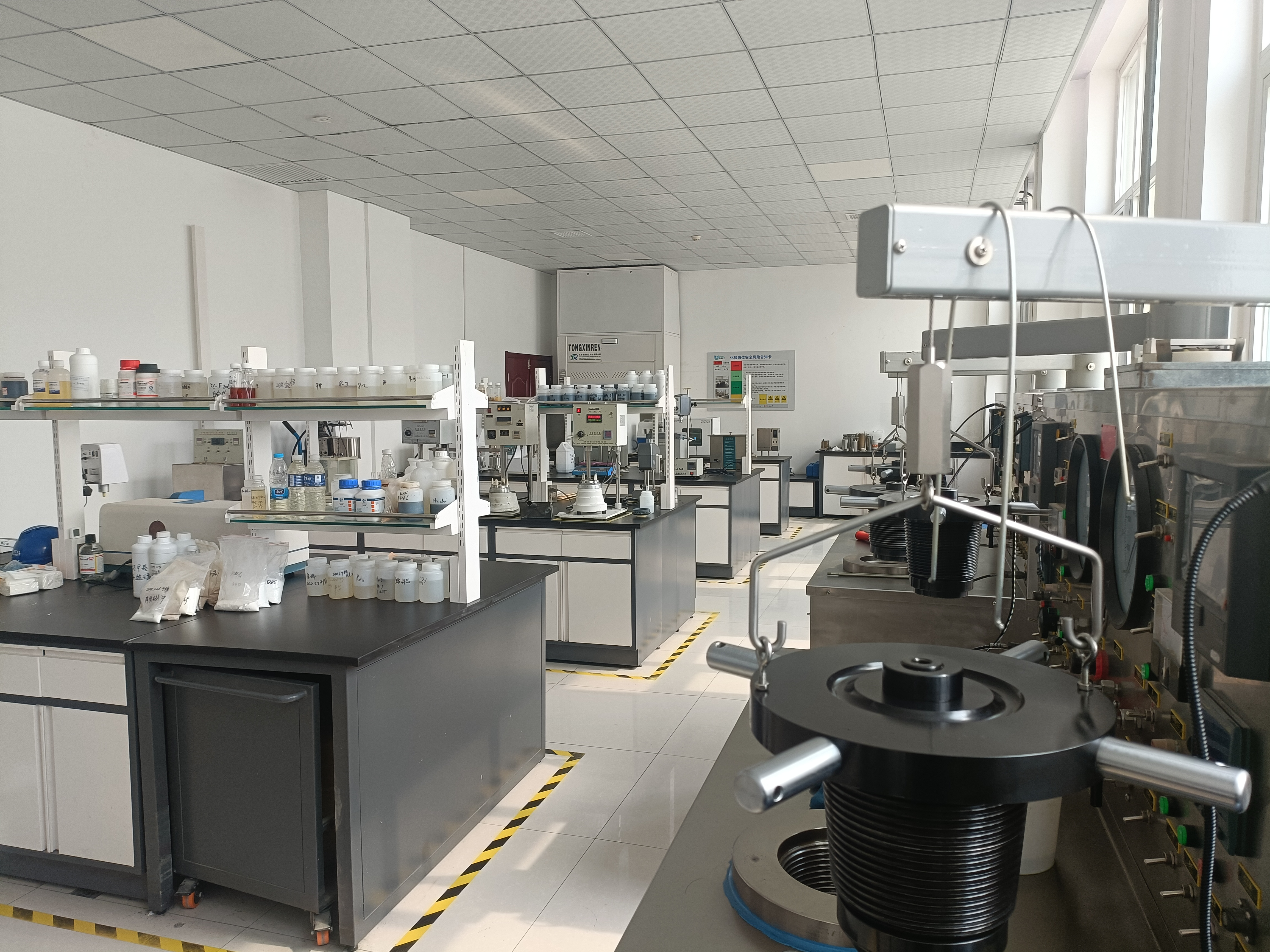
A cement additive should not be selected based solely on its nominal specification.
Laboratory evaluation under simulated downhole conditions is essential to determine whether the additive is compatible with the complete cement formulation.
Typical cement slurry tests include:
- Slurry density
- Rheology
- Free water
- Fluid loss
- Thickening time
- Static gel strength
- Compressive strength
- Sedimentation stability
- Gas migration performance
For HPHT wells, testing should be conducted under representative temperature and pressure conditions whenever possible.
The interaction between different additives is also important. A fluid loss additive, for example, may influence rheology or thickening time, while a dispersant may change the response of other polymers.
Therefore, cement slurry design should be considered as a complete system rather than as a simple combination of individual products.
Cementing Additives for Different Well Conditions
The appropriate additive package depends on the specific application.
| Well Condition | Key Cementing Requirements | Typical Additive Focus |
| Deep Wells | Long pumpability and temperature stability | Retarders, fluid loss additives |
| HPHT Wells | High-temperature stability and controlled thickening | HPHT retarders, fluid loss additives, dispersants |
| Gas-Bearing Formations | Gas migration control | Fluid loss and gas migration control additives |
| High-Density Slurries | Suspension stability and rheology control | Dispersants, anti-settling additives |
| Deepwater Wells | Low density and reliable placement | Lightweight additives, dispersants, fluid loss additives |
| Loss Zones | Controlled slurry placement | Lost circulation materials |
| Long-Term Zonal Isolation | Mechanical and chemical durability | Expanding additives, gas migration control systems |
Moving Toward More Reliable Cementing Systems
The cementing industry is increasingly focused on improving well integrity, operational reliability and long-term zonal isolation.
Modern cementing technologies are moving beyond simply achieving compressive strength. Engineers increasingly consider the entire life cycle of the well, including drilling, production, stimulation, abandonment and, in some cases, CO₂ storage.
Industry technology developments are also focusing on adaptive cement systems, gas migration control, deepwater cementing, alternative cement systems and improved cement evaluation technologies.
For cementing additive manufacturers, this creates an important requirement: additives must deliver stable, predictable and reproducible performance under real well conditions.
Conclusion
Cementing additives are essential tools for designing high-performance oil-well cement systems.
In HPHT and other challenging wells, the correct combination of fluid loss control, thickening time control, rheology modification, gas migration control and high-temperature stability can significantly improve cement placement and zonal isolation.
However, no single additive can solve every cementing challenge. Successful cementing requires a complete system approach that considers cement chemistry, additive compatibility, well conditions and laboratory verification.
Foring Chemicals is committed to developing and supplying cementing additives for demanding oilfield applications, including fluid loss control, retardation, dispersion, gas migration control and other specialized cementing requirements.
Our technical team can work with customers to evaluate cement slurry formulations and develop additive solutions according to specific well conditions and performance requirements.
Post time: Sep-09-2026