

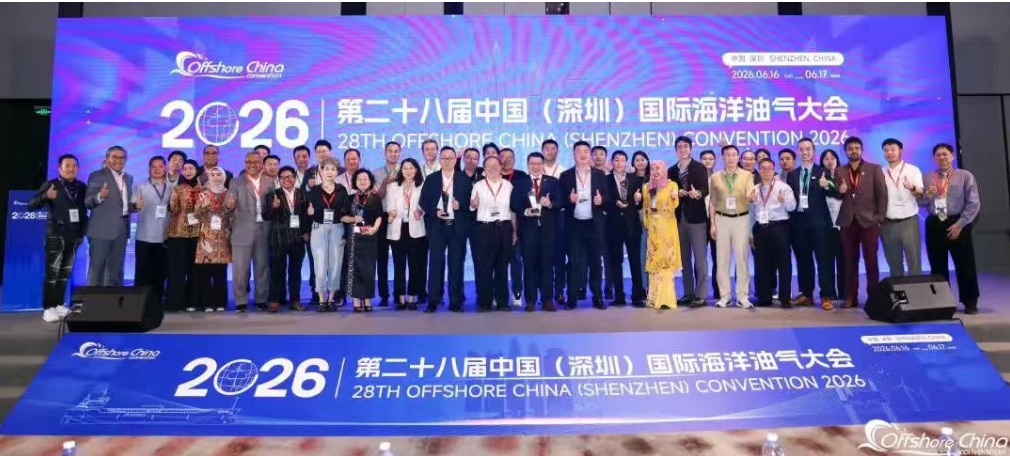
Day 1 of the conference focused on global market hot topics and long-term strategic forecasts. Yang Yun, Expert from CNOOC Energy Economics Institute, delivered a keynote speech covering the full industrial chain of offshore oil and gas equipment. Below is the core content shared by Yang Yun at the event (the article has not been reviewed by the speaker).
1. Global Macroeconomic & Market Landscape of Offshore Oil & Gas Equipment
1.1 Complex Global External Environment
The global landscape is shaped by intertwined geopolitical rivalries and pervasive instability. The US-China competition creates critical risks of decoupling and supply chain restructuring for core technologies and key components of offshore engineering equipment. The Russia-Ukraine conflict has disrupted European oil and gas supply channels, while regional conflicts in the Middle East trigger volatility in vital maritime chokepoints, which are major drivers of international oil price fluctuations.
As observed recently, oil prices plunged notably after the US and Iran failed to reach a new agreement. Overall, crude oil prices maintain a moderate upward trend with periodic fluctuations within the $60–70 per barrel range. Globally, economic growth remains sluggish and divergent, with an overall growth rate of approximately 3%. Driven by new economic credit tools, the US economy grows at around 2%, while Europe and Japan register slower growth rates. Emerging and developing economies outperform advanced economies in growth momentum.
From the energy transition perspective, to meet the Paris Agreement target of limiting global warming to 2°C, non-fossil energy sources will account for 51%–121.5% of the global energy mix by 2060, exceeding 70% by 2100. Technological innovation stands as the core engine of energy transformation. Breakthroughs in offshore wind, marine PV, hydrogen energy storage and other renewable sectors are reshaping the global energy structure. After carbon peaking, zero-carbon and negative-carbon projects and technologies will enjoy broad commercial prospects, with massive untapped potential in China’s market. Meanwhile, emerging energy technologies including nuclear fusion will bring profound disruptions to the whole oil and gas industry.
1.2 Offshore Capex & Segmented Equipment Market Forecast
Global capital expenditure for offshore oil and gas exploration and development is projected to rise by about 25% during 2026–2030 compared with the previous five-year cycle, with the growth peak expected in 2027. Key subsectors including drilling & completion module construction, offshore oilfield maintenance and subsea production facilities will see robust expansion. Market growth for these segments will surge 30%–60% in the two five-year periods of 2020–2024 and 2025–2029.
Digital technologies such as IoT and AI are transforming the industry: their influence has evolved from operational efficiency improvement to complete business model restructuring. The offshore engineering sector features extremely high entry barriers, driven by enormous capital investment, stringent technical thresholds and strict regulatory supervision, which deter new direct competitors. Besides, large international EPC contractors have recorded weak profitability in recent years, further reducing the sector’s appeal to homogeneous new suppliers.
Nevertheless, cross-industry competition is emerging rapidly. Tech giants are stepping up investment in oilfield services and marine construction:
- Huawei has launched a full-spectrum intelligent solution covering the entire offshore oil and gas industrial chain and established strategic alliances with industrial partners.
- Intel and Microsoft formed a joint venture targeting marine digitalization; PetroChina and Baidu co-founded a dedicated subsidiary for offshore smart operations.
Digital and intelligent transformation is reshaping corporate competitiveness and revenue models. Halliburton shifted its core business from hardware sales to customized operational optimization solutions, generating revenue based on efficiency improvement gains. Schlumberger evolved from pure equipment supplier to a comprehensive data operation service provider. Domestic offshore engineering enterprises now face dual competition: traditional international oil service players, plus tech giants including Huawei, Microsoft and Siemens, which are disrupting established business models across marine energy projects.
1.3 Global Offshore Oil Output & Equipment Demand Outlook
Offshore oil remains an irreplaceable pillar of global crude supply. Global offshore oil production will peak at 1.5 billion tons by 2030, accounting for roughly 30% of total global oil supply. Output will decline to 1 billion tons by 2040 while retaining a 30% global supply share. Over the next 40 years, the split between shallow-water and deepwater output will stay relatively stable: shallow-water production takes up 70% of total offshore volume, led by the Persian Gulf region with the largest resource potential worldwide.
Overall demand for offshore engineering equipment is set to enter a new growth cycle in the coming five years, supported by three major drivers:
- Booming deepwater equipment demand
Deepwater reserves account for 68% of newly discovered global oil and gas resources. An additional 30 drilling rigs and drillships will be required globally between 2025 and 2030. - New equipment demand spurred by energy transition
Supporting hardware for offshore wind power sees sharp growth, with a severe shortage of installation vessels for large-capacity wind turbines. China plans to lay an extra 500–1,000 km of submarine cables, driving corresponding equipment demand. Green special equipment including offshore CCUS facilities, marine charging stations and hydrogen energy hardware will unlock massive market opportunities. - Large-scale replacement and green intelligent upgrading of existing assets
Most mainstream offshore units were built around 2000 and are now entering a concentrated replacement window. Mandatory intelligent and low-carbon retrofits further accelerate equipment renewal. Operators prioritize fleet upgrades to boost operational efficiency and meet net-zero emission targets, pushing the whole industry toward low-carbon, energy-saving and eco-friendly equipment.
Utilization rates of core operating assets are projected to rise versus 2015 levels. Drilling rig utilization will hit 93% in the next five years; utilization of large heavy-lift vessels will reach 70%, alongside rising demand for buoyancy tanks. While jacket platform markets expand rapidly, oversupply persists in this segment. Global offshore equipment expenditure will reach $43.7 billion in 2025 and climb to around $50 billion by 2027, forming a huge market space amid structural oversupply.
China is steadily advancing into high-end offshore equipment manufacturing. Offshore module capital expenditure in China will stand at $50 billion in 2025, rising by approximately 10% to nearly $55 billion by 2027.
1.4 Subsea Production System Market Analysis
Subsea production systems feature high price elasticity driven by structural market demand, with the mainstream delivery model shifting to EDCI (Engineering, Design, Construction & Installation). This integrated model covers full services from umbilical cables and risers to financial coordination and post-delivery feedback, where Chinese enterprises hold strong competitive advantages. The global subsea production system market will expand from $8 billion in 2025 by 50%–120% to $12 billion by 2027, primarily fueled by demand from Europe and Africa.
Since 2018, delivery models for subsea production systems have transitioned from EPC (Engineering, Procurement, Construction) to EDCI. Apart from a small number of traditional equipment vendors, most industry players have merged or expanded to offer full EDCI packages.
As core hardware for full-field offshore development, MPS (Marine Production System) maintains stable market performance with a relatively compact market scale compared with other assets. Valued at $12.5 billion in 2025, the market will grow steadily by around $1 billion annually through 2027, dominated by deepwater projects.
IPSO (Integrated Project Service) emerges as a unified delivery solution combining separate topside module and traditional engineering packages, covering semi-submersible platforms, tension leg platforms and other floating units. Four major global platform suppliers hold a total of about 190 orders, supported by large-scale FID (Final Investment Decision) projects. Globally, over 10 offshore projects are operational, under construction or in planning, with one major domestic project underway. Chinese enterprises have mastered full EPC general contracting capacity, yet independent domestic design drawings for offshore FPSOs remain unavailable.
Marine CCUS boasts extraordinary resource potential, with an estimated geological CO2 storage capacity of 258 million tons. A multi-media laser CCUS project has been fully completed, while Zhuhai and other Chinese regions are actively advancing offshore carbon capture and storage programs. The Enping 15-1 oilfield achieved full domestic localization in 2025, featuring self-developed electrical separation equipment. CNOOC is launching extensive LRP (Long-Term Research Program) pre-studies targeting CCS projects, focusing on CO2 sequestration in Guizhou and the entire Greater Bay Area.
2. Four Core Development Trends of Global Offshore Oil & Gas Equipment Industry
2.1 High-Efficiency Upgrading
High-performance equipment with advanced technologies extends asset service life and enhances operational efficiency, enabling manufacturers to secure high-end market share and consolidate core competitiveness. Innovations such as twin-hull platforms represent typical high-efficiency hardware solutions for deepsea operations.
2.2 Deepwater-Focused Resource Development
Shallow-water oil and gas reserves are gradually depleted, driving global exploration toward deepwater zones. New hydrocarbon discoveries are mainly located in waters deeper than 1,500 meters, with the Santos Basin in Brazil, Guyana and Suriname emerging as global exploration hotspots. Deepwater and ultra-deepwater developments have become the primary growth engine of global oil and gas output. Continuous technological breakthroughs are underway for next-generation FPSOs, tension leg platforms, semi-submersible production units and subsea systems designed for extreme water depths exceeding 3,000 meters.
2.3 Low-Carbon & Green Transformation
Green and low-carbon development is an inevitable path for sustainable marine economic growth. Its core goal is to deploy advanced hardware and technologies across the full lifecycle of large offshore assets to cut energy consumption and emissions while meeting production and construction requirements, covering three key dimensions:
- Large-scale commercial application of negative-carbon technologies;
- Accelerated transition of marine fuel mix: based on fuel maturity, resource availability, economic efficiency and decarbonization potential, LNG, net-zero fuels and methanol will account for 57%, 35% and 8% of marine fuel consumption by 2060 respectively;
- Full-lifecycle carbon reduction via ETC, IC and other low-carbon management technologies.
2.4 Intelligent & Digital Transformation
AI and big data provide robust support for smart offshore platforms, pushing traditional operations toward full digitalization. The industry is evolving into a fully automated workflow featuring real-time data collection, instant analysis, dynamic decision-making, remote operation and instant feedback. Robotic technologies significantly boost offshore safety and efficiency, including AUVs, inspection crawling robots, drones and ROVs for remote monitoring, which have achieved preliminary commercial adoption across oil and gas sites.
Breakthrough Directions for Core Equipment
- Floating Production Platforms
- Technical R&D for ultra-deepwater operations and extreme environments including polar ice and hurricanes;
- Full-lifecycle intelligent operation & maintenance systems;
- Diversified relocatable floating platforms including semi-submersible units to cater to multi-stage development needs;
- Integrated low-carbon technologies: onboard PV, energy storage, LNG power and marine CCUS; hybrid wind-oil platform design to realize complementary energy utilization.
- Subsea Technology Innovation
- Ultra-high pressure & ultra-deepwater core hardware: over 20,000 PSI high-pressure manifolds, long-distance large-diameter umbilical cables and riser systems for 4,000-meter water depth, ultra-long-distance power and signal transmission infrastructure;
- Full-electric drive systems replacing traditional hydraulic equipment, with R&D prioritizing clustered intelligent subsea robots;
- Cross-industry expansion: subsea production systems extended from oil & gas to deep-sea mineral mining;
- Standardization and modular construction: unified general designs and standardized fabrication to lower costs and shorten construction cycles.
Additional Green & Efficient Equipment Development
- Hybrid full-electric propulsion, waste heat recovery dual-fuel engines, fuel cells, integrated flare gas recovery and methane emission control technologies for energy conservation;
- Large-scale IPS (Integrated Power System) processing units with 1 million tons annual handling capacity for multi-functional flexible deployment;
- Scaled marine CCUS industrial chains, breakthrough offshore carbon neutrality technologies, large marine monitoring detectors, long-distance CO2 transportation pipelines and high-integrity storage monitoring systems with long-term tracking mechanisms for permanent carbon sequestration;
- Integrated wind-oil platform solutions to realize cross-energy synergy;
- Deep-sea mineral exploitation hardware with dedicated subsea production technologies for mining, lifting and processing systems (China’s marine mineral resources are mostly buried at 4,000–6,000 meters water depth, supported by proprietary domestic design frameworks).
3. Current Status of Global Offshore Oil & Gas Equipment Industrial Chain
3.1 National Industrial Layout & Strategies
- United States: Global Technology Leader
US offshore engineering enterprises maintain technological and market dominance with decades of technical accumulation and complete industrial supporting facilities. Major industry giants secure leadership via new carbon credit policies and intelligent upgrades of traditional equipment, fueled by the global green energy transition wave. - Europe: Green Transformation Pioneer
Europe’s irreplaceable energy supply chain underpins its offshore development strategy. Operators continuously launch new projects to stabilize oil and gas output, with clear carbon reduction targets: halve offshore production emissions by 2030 and achieve full net-zero operations by 2050. While safeguarding regional and global energy security, European players aim to lead the worldwide low-carbon shift of offshore oil and gas. - Singapore: Global Offshore Engineering Service Hub
Benefiting from prime geographic location and complete supporting infrastructure, Singapore has grown into a central shipping and marine engineering hub. It adopts an introduction-absorption-innovation development model to master independent core design capacity, delivering turnkey EPC packages covering project management, construction and on-site commissioning across the whole industrial chain. Singapore has realized full independent R&D for FPSO design and formed a complete localized manufacturing system. - Brazil: Deepwater Development Benchmark
Endowed with abundant deepwater resources, Brazil rolled out dedicated technological innovation programs for deepwater oilfield exploitation to build a full domestic deepwater industrial chain. A dual strategy of international innovation cooperation and local industrial protection enhances equipment localization and operational management capacity, enabling Brazil to achieve self-sufficient oil supply with export capability and establish itself as a top global deepwater operator.
3.2 Three-Tier Global Market Competition Landscape
- 1. Tier 1: Europe & the US – Dominate high-value R&D, design and technical services, holding core high-end value chain links;
- 2. Tier 2: South Korea & Singapore – Lead assembly and construction of premium offshore equipment with mature manufacturing foundations;
- 3. Tier 3: Emerging players including China and Brazil – Deliver continuous deepwater technical breakthroughs with steadily rising global market share.
3.3 Industrial Chain Segmentation & Core Links
R&D and design sit at the top of the industrial chain, connecting upstream and downstream data flows. Four core technical breakthrough directions define current industry R&D:
- Deepwater & ultra-deepwater engineering technologies;
- Digitalization and intelligent operation systems;
- High-efficiency and eco-friendly equipment solutions;
- Advanced new materials including composite, aluminum and titanium alloys for lightweight construction and superior corrosion resistance.
European and American enterprises monopolize top-tier R&D with formidable technical barriers. High-performance structural steel and corrosion-resistant alloys for pipelines and valves form the material foundation of offshore equipment, which must withstand combined extreme conditions: ultra-high pressure, low temperature, severe corrosion and high fatigue load. All hardware requires strict international certification, serving as a key benchmark of comprehensive national industrial competitiveness.
Global manufacturing capacity is geographically concentrated:
- South Korea: Samsung Heavy Industries and other yards hold prominent market share in large offshore unit construction;
- China: Leading shipyards including CNOOC, China Merchants Heavy Industry dominate global hull construction with unmatched scale and cost advantages;
- Singapore: Specializes in offshore asset retrofitting, focusing on intelligent reconstruction, modularization and core supporting equipment such as production manifolds, power systems, gas turbines and water treatment modules (water treatment hardware sees the fastest market growth).
High-end auxiliary equipment including dynamic positioning systems, electromechanical integration modules is highly concentrated in European and American suppliers, who maintain deep long-term cooperation with global operators. Chinese manufacturers have achieved remarkable progress in breaking this supply monopoly.
The offshore equipment operation & maintenance market is expanding rapidly. As global asset stock and service life grow, full-lifecycle management becomes critical for safe and efficient production, covering installation & commissioning, inspection & maintenance, upgrade overhaul, decommissioning and digital asset management. Major OEM manufacturers are the primary participants in this fast-growing segment.
Conclusion
The global offshore engineering equipment market enters a structural growth cycle driven by three overlapping factors: accelerated deepwater development, large-scale replacement of aging assets and global energy transition. High-end manufacturing, ultra-deepwater capacity, low-carbon design and intelligent operation define the core directions of industrial evolution, forming a tiered global competitive landscape.
Leveraging its complete industrial system and large-scale manufacturing advantages, China occupies a pivotal position in hull and platform construction, while continuously expanding its footprint in high-end equipment manufacturing and emerging green energy segments. The offshore oil and gas industry will accelerate cross-technology integration and innovation in the coming years, delivering robust momentum for global marine energy security and sustainable low-carbon development.
Post time: Jun-24-2026